

If you’ve driven through a Caldwell winter, you already know it’s not just “cold.” It’s gritty. One day the roads are wet and slushy, the next day everything dries out, and suddenly that slush turns into dusty sand that gets kicked up nonstop. That mix of traction grit, farm-truck debris, and slush spray is just part of winter life in the Treasure Valley.
The problem is, winter road conditions don’t just make your car look dirty, they actively wear down your paint. That repeated impact causes paint chips on the front end, pitting in the clear coat, and abrasion along the lower panels where road grime builds up. Even if you’re careful and keep distance, it’s hard to avoid grit spray when you’re commuting through Canyon County roads, hopping on I-84, or driving rural connectors around Caldwell.
In this guide, we’re going to explain what “winter road grit” really is, why it’s such a paint hazard in Idaho, and how Paint Protection Film can prevent this kind of damage when it’s applied correctly through professional PPF installation.
What “Winter Road Grit” Means in Caldwell, Idaho
In Idaho, winter road grit is typically a mix of traction materials that help reduce slipping and improve stopping control when temperatures drop. It’s used because it works, but it also creates one of the most consistent paint hazards we see during winter months in the Treasure Valley.
Winter road grit usually includes:
- Sand
- Crushed rock
- Cinders
- Loose gravel and general winter road debris
Once traffic moves over it all day, that grit gets pushed to shoulders, dragged back into lanes, and launched into the air by tires. So even when roads don’t look “bad,” your vehicle can still be taking hits the entire drive. That’s why people who commute around Caldwell, drive to Boise regularly, or run errands through Canyon County often notice new chips showing up long before spring.
This is exactly where paint chip protection becomes less of a cosmetic upgrade and more of a practical decision for keeping a vehicle looking clean and well-kept.
How Winter Grit Damages Paint Over Time
Winter grit doesn’t destroy paint in one dramatic moment, it wears it down gradually. At highway speed, sand and tiny stones strike your vehicle like micro projectiles. One hit might not seem like much, but once it creates a small weakness in the clear coat, the next hit spreads it. Over a season, this is how a “nice paint job” starts looking rough and tired even if you wash your car regularly.
The most vulnerable areas are the ones that take direct impact: the front bumper, hood, mirrors, and the rocker panels along the lower sides. Those rocker areas are especially important in Idaho because slush spray carries grit and grime straight into that zone, and it stays there like sandpaper. When chips reach the base coat, the risk isn’t just cosmetic anymore, moisture can work its way in and you start creeping toward long-term deterioration.
That’s why prevention matters more than correction. It’s always easier to stop damage than constantly chase touch-ups, polishing, or repainting panels later.
What Paint Protection Film Is and How It Works
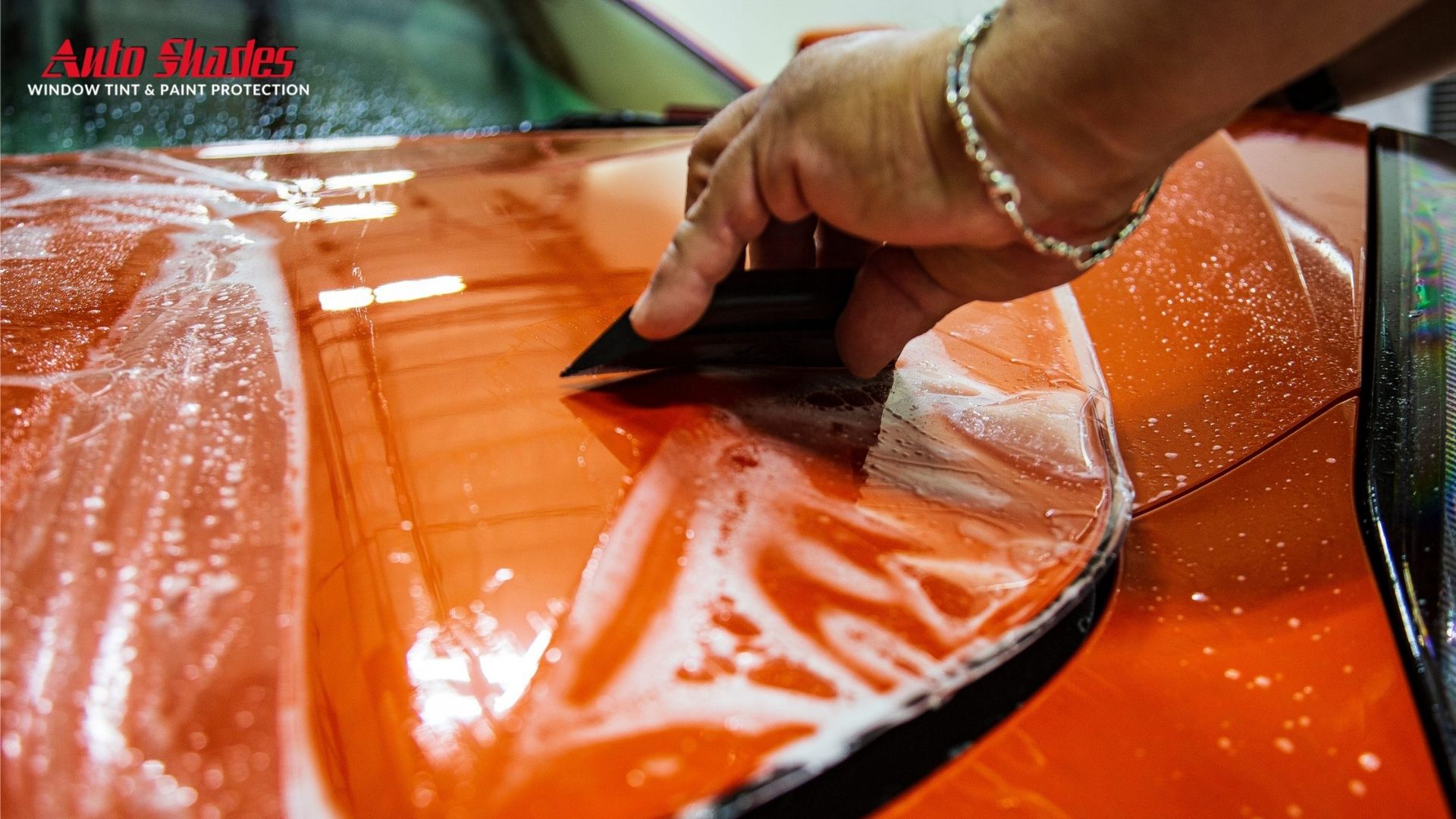
Paint Protection Film is a clear, durable urethane film that sits on top of your factory paint and takes the impact instead of your clear coat. Most people think it’s just a cosmetic add-on until they actually see what it prevents, especially in winter. The simplest way to explain it is: PPF is a physical barrier between your paint and the road.
Instead of grit striking your clear coat directly, it strikes the film. That matters because PPF is designed to absorb impact energy, resist abrasion, and prevent chips from forming in the first place. It’s also why people call it a “clear bra”, because it protects the most exposed areas of the vehicle from constant damage.
One of the biggest advantages is self-healing capability on many modern films. Light swirl marks and fine scratches that would normally stay in clear coat can fade away with heat (sun exposure, warm water, or normal surface warmth). When you combine that with high-impact protection, you end up with durable paint protection that holds up much better under Idaho winter conditions.
Where PPF Makes the Biggest Difference for Idaho Winter Driving
Winter driving in Caldwell is all about impact zones. The paint doesn’t get damaged evenly, it gets damaged in the same areas over and over because those are the places that face debris head-on. If you do any highway driving at all, you’ll see it first on the front end. If your vehicle sees a lot of slush spray and road grime, you’ll see it along the rockers and lower doors.
The most common PPF coverage options include:
- Partial front protection
- Full front PPF (more complete front-end protection)
- Rocker panel protection
- Full-body Paint Protection Film coverage
Choosing the right package depends heavily on how you drive. If your vehicle stays mostly in-town, you may not need the same coverage as someone who drives I-84 frequently, commutes daily, or drives behind trucks and work vehicles all winter. But the overall concept stays the same: protect the areas that get hit the most, and winter damage becomes far less of a problem.
This is why we always guide Caldwell drivers toward practical PPF decisions based on real usage, not just what looks good on paper.
Why PPF Installation Quality Matters (Especially in Winter)
In Idaho winter conditions, Paint Protection Film is only as good as the work behind it. This is one of those upgrades where the material itself is excellent, but the end result depends heavily on execution. Winter grit, slush spray, and freezing temps create constant stress on edges and seams, so any weakness in the install gets exposed fast.
What can go wrong with poor PPF installation:
- Lifting edges that start catching grime and moisture
- Visible seams that trap dirt and ruin the clean finish
- Trapped debris or contamination under the film
- Stretch marks or distortion around curves and corners
- Premature failure because the film wasn’t bonded properly
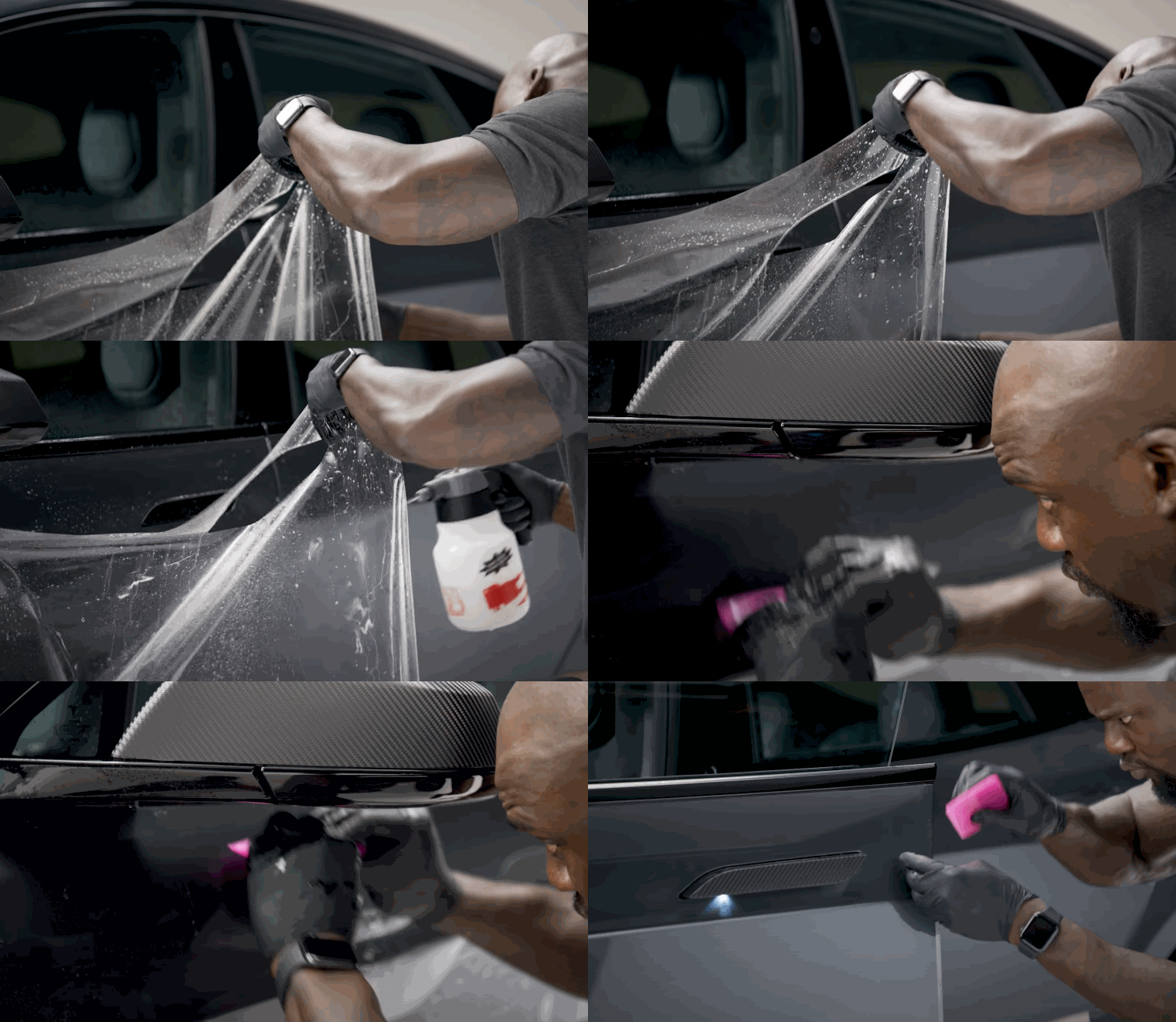
The difference-maker is prep, alignment, and edge finishing, especially in high-impact areas like the bumper and hood. Clean installation conditions matter too because anything floating in the air or stuck on the surface becomes permanently visible once the film is applied. That’s why professional technique is not just “nice to have,” it directly determines whether the film performs like protection or becomes a headache.
At Auto Shades Idaho, our focus is always long-term results, not quick installs. When we handle PPF installation, we treat it like a protective system that needs precision, clean prep, and the kind of finishing that holds up through real Caldwell winters.
For more on compliance or to schedule a consultation about PPF, contact Auto Shades Idaho.
PPF vs Ceramic Coating for Idaho Winters (Which Protects Better From Grit?)
This is one of the most common questions we hear, and it’s a good one. Both products are great, but they’re not designed to solve the same problem. If the issue you’re trying to prevent is winter road grit and rock chips, one option clearly does the heavy lifting.
The simplest difference:
- Paint Protection Film absorbs impact and prevents chips
- Ceramic coating reduces bonding of grime and improves cleaning
- PPF protects the paint from physical damage, coating protects the surface behavior
- Ceramic coating does not stop rock chips the way PPF does
- Combining both can be ideal for vehicles driven all winter
In other words: ceramic coating is fantastic for keeping the vehicle easier to wash, especially when Caldwell roads get that gray slushy film that sticks to everything. But when it comes to gravel spray and grit impact, coating can’t physically block a rock from hitting the paint. That’s exactly why PPF is the stronger option for winter-driven vehicles in Idaho.
What we usually recommend is simple and honest: if you drive highways regularly or your vehicle sees real winter miles, prioritize Paint Protection Film on the impact zones first. From there, adding coating (either over the film and/or on the rest of the vehicle) can give you the best of both worlds. That’s the kind of practical guidance we give every day at Auto Shades Idaho, because the goal isn’t selling hype, it’s protecting paint in real conditions.
How to Maintain PPF During Winter in Caldwell
One of the biggest advantages of Paint Protection Film is that it makes winter life easier, but it still needs the right habits to keep it looking sharp. Winter maintenance matters because grit buildup and harsh cleaning methods are usually what cause swirls, haze, or edge wear, not the film itself.
Practical winter care tips that actually work:
- Use gentle, consistent washing to prevent grime buildup
- Avoid abrasive brushes (especially at self-serve bays)
- Rinse thoroughly before touching the surface
- Use soft microfiber tools instead of aggressive scrubbing
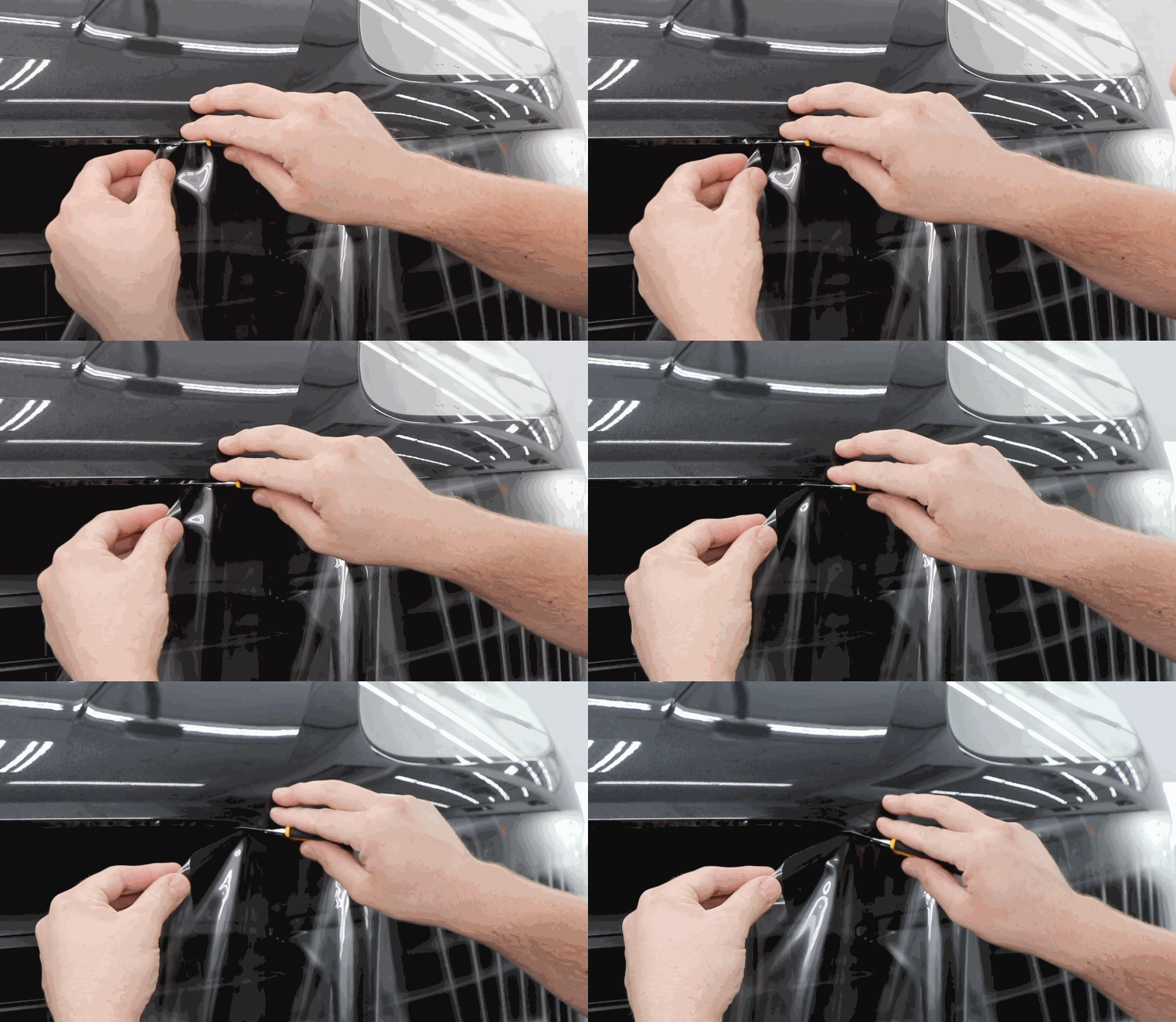
- Don’t pick at edges or try to “lift and clean” corners
- Avoid low-quality automatic brush washes that slap the paint repeatedly
The key is to treat winter grime like sandpaper: if you rub it dry, you will create marring. If you soften it and rinse it properly first, you’ll keep the surface smooth and the film clear. Also, when ice builds up, it’s better to let it melt with safe rinsing or warmer conditions rather than scraping aggressively, especially around edges and wrapped areas.
And if you’re ever unsure about what’s safe for your film, that’s exactly what we’re here for. At Auto Shades Idaho, we help our Caldwell customers not only install protection, but also maintain it correctly so it stays clean, glossy, and effective through every winter season.
Conclusion: Protect Your Paint Before Winter Does Permanent Damage
Every winter in Caldwell, the roads fight your paint the same way: grit, sand, slush spray, and gravel debris hitting the most vulnerable areas again and again. Those impacts create chips, pitting, and worn clear coat over time, and once that damage is there, fixing it usually costs more than most people expect.
That’s why Paint Protection Film remains the best defense against Idaho winter road grit. It doesn’t just make paint easier to clean, it physically blocks damage by absorbing impacts before they reach your clear coat. But for it to perform the way it should, PPF installation quality matters just as much as the film itself, especially in a climate like ours.
If you want real paint protection that holds up through Treasure Valley winters, reach out to Auto Shades Idaho. We’ll help you choose the right coverage, install it the right way, and keep your vehicle looking better for the long run. Contact us today to get a quote or talk through the best PPF package for how you drive in Caldwell and Canyon County.
Idaho’s #1 for Auto Tint, PPF & Ceramic Coating
phone
address
Opening Hours
Tue - Sat: 09:00 AM - 05:00 PM Sun - Mon: Closed
address
Opening Hours
Mon - Fri: 09:00 AM - 05:00 PM Sat - Sun: Closed
- 6302 E Cleveland Blvd, Suite B
- 4702 Beacon Ln, Suite 106